Premium Systems Leader+1 (800) 123-4567
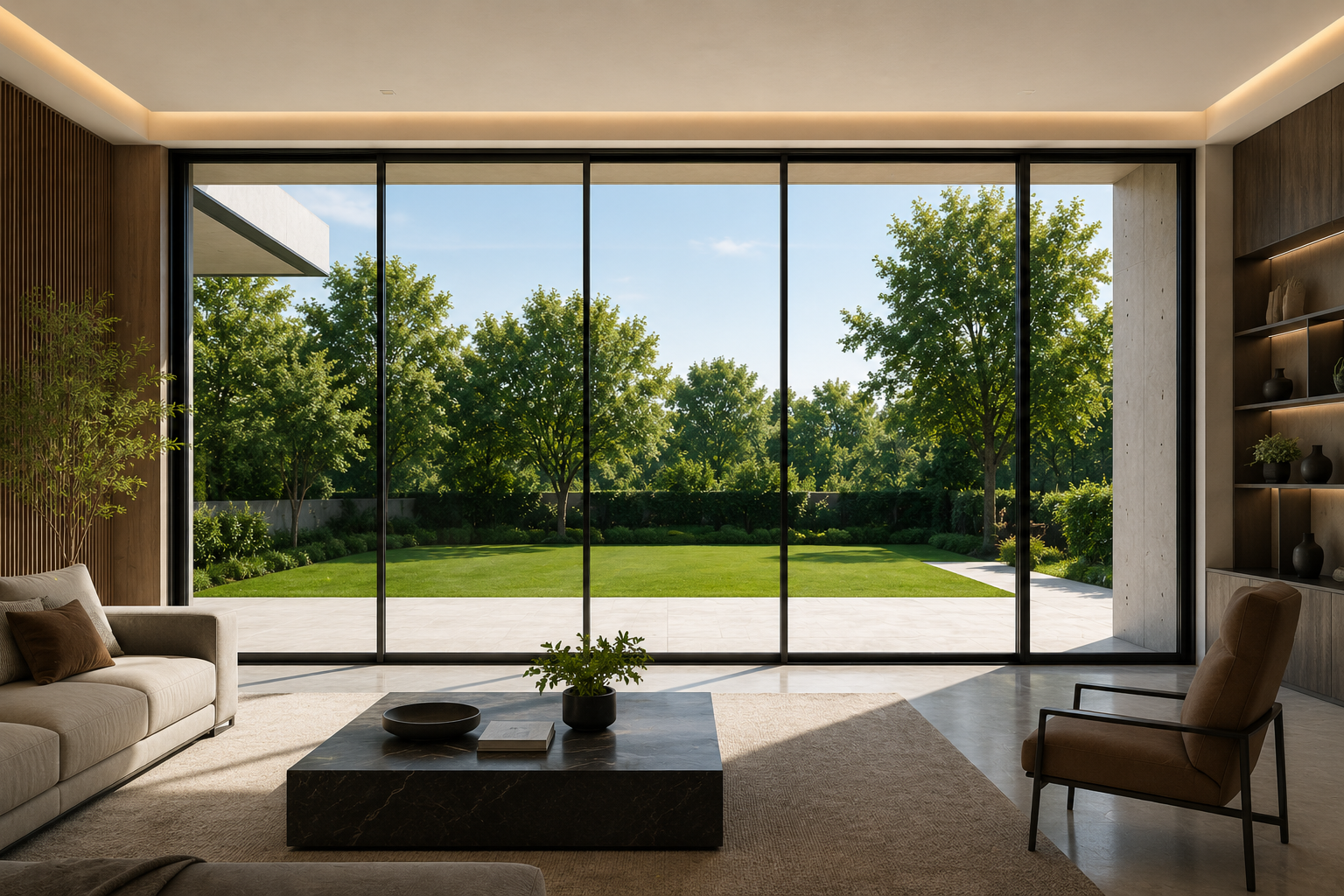
Modern architecture is moving towards larger glass areas, cleaner elevations, and slimmer window and door frames. Minimal frames create a refined and contemporary appearance, but achieving slimmer sightlines without compromising performance requires careful engineering.
As the visible aluminium frame becomes narrower, every component of the system becomes more important—from profile design and structural strength to hardware, sealing, manufacturing, and installation.
The goal is not simply to make the frame smaller. It is to create a system that delivers minimal aesthetics with reliable performance.
A slimmer visible frame does not simply mean using less aluminium. Large glass panels can be considerably heavy, while wider openings can experience greater structural loads.
The aluminium system must therefore be designed to provide adequate strength, rigidity, and stability while maintaining a minimal appearance.
This is where engineering becomes critical. The profile geometry, dimensions, glass configuration, and overall system design must work together to achieve the required performance.
The performance of an aluminium system depends on much more than its visible sightline. Profile geometry and system configuration play an important role in determining structural performance.
A properly engineered profile considers factors such as:
Simply reducing the visible width of a conventional profile does not automatically create a high-performance minimal system.
A genuine minimal system needs to be engineered as a complete solution.
Minimal aluminium systems are often used for larger glass panels and expansive openings. As panel size and glass weight increase, the hardware becomes increasingly important.
Rollers, hinges, handles, locking mechanisms, and other system components need to be appropriately selected for the application.
The objective is to maintain smooth movement, reliable locking, and consistent operation while supporting the required panel weight.
A slim frame is only successful when the complete system performs together.
Large architectural openings can increase exposure to external environmental conditions. A well-engineered aluminium system therefore needs to address important performance requirements such as:
Components such as EPDM gaskets, seals, drainage paths, and carefully designed joints contribute to the overall performance of the system.
Minimal aesthetics should not come at the expense of protection and functionality.
Slim aluminium systems require careful attention to manufacturing and installation because smaller sightlines can leave less visual tolerance for inaccuracies.
Precise fabrication and installation help ensure proper:
The final performance of a minimal system depends not only on the aluminium profile but on how accurately the complete system is fabricated and installed.
A minimal aluminium system is not defined by a narrow frame alone.
The aluminium profile, glass, hardware, gaskets, drainage, fabrication, and installation all need to work together as one engineered system.
This approach allows architects and designers to create larger openings, cleaner elevations, and more uninterrupted views while maintaining the functional requirements of the building.
The simpler the finished appearance looks, the more important the engineering behind it becomes.
Slimmer aluminium frames demand more than good design. They require better engineering, precise manufacturing, and careful system integration.
As architectural openings become larger and sightlines become narrower, every part of the system has to perform effectively—from the aluminium profile and glass to the hardware, seals, fabrication, and installation.
At Alunika Systems, precision-engineered aluminium systems are designed to bring together minimal aesthetics and the performance required for contemporary architectural applications.
Because when the frame gets smaller, the engineering behind it has to get smarter.
Alunika Systems — Precision Engineered Aluminium Systems.
Explore our innovative systems or read more insights from our team.